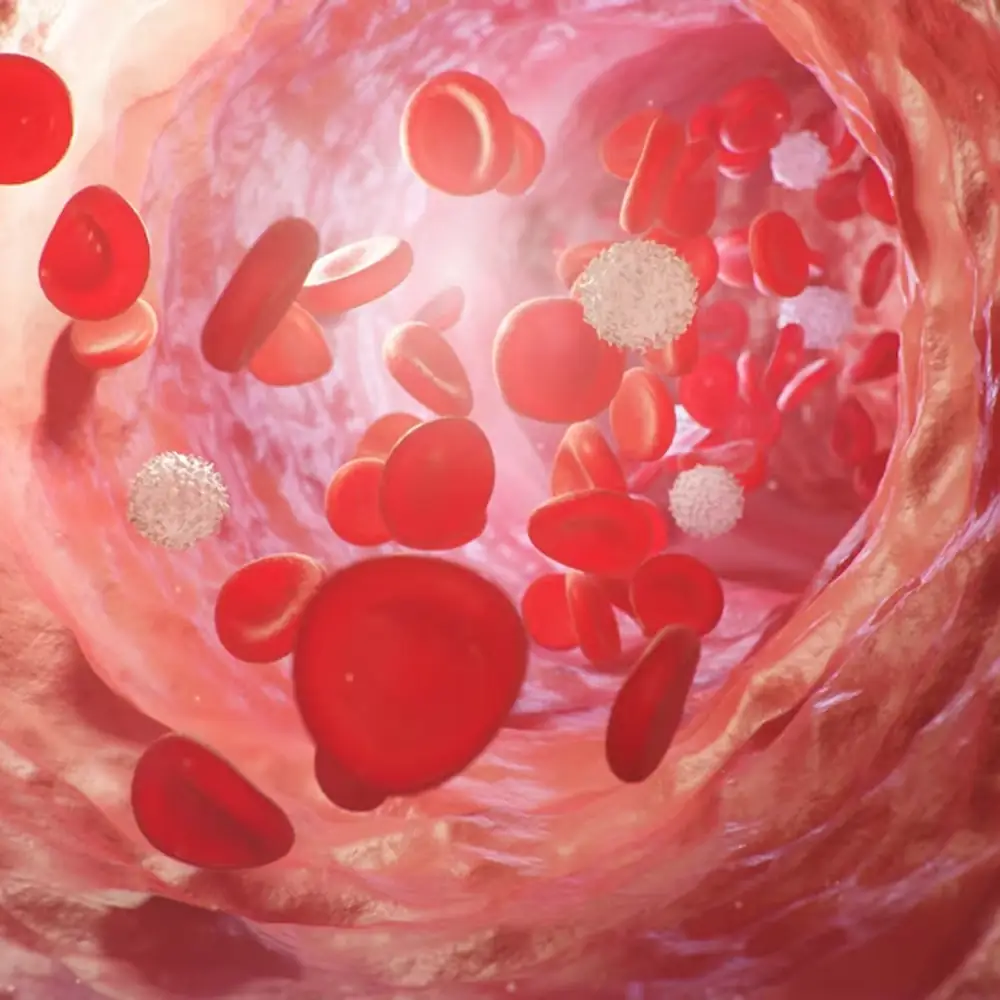
Nitric oxide sounds like something from a chemistry class, not something your body makes on purpose — but it does, constantly, and it plays a surprisingly central role in circulation. Here's a plain-language look at what it actually is and why so many circulation-focused supplements are built around supporting its production.
What Nitric Oxide Actually Is
Nitric oxide (chemical formula NO) is a simple molecule made naturally by cells lining your blood vessels, called the endothelium. Despite its simplicity, it acts as a signaling molecule — it tells the smooth muscle in blood vessel walls to relax. This discovery was significant enough that the scientists who identified nitric oxide's role in the cardiovascular system won the Nobel Prize in Physiology or Medicine in 1998.
How Vessel Relaxation Affects Blood Flow
Blood vessels aren't rigid tubes — they have a layer of smooth muscle that can constrict (narrow) or relax (widen) the vessel. When nitric oxide signals this muscle to relax, the vessel widens, a process called vasodilation. A wider vessel offers less resistance to blood flow, which is directly relevant to blood pressure: pressure is a function of how much resistance the blood encounters as it moves through the vascular system.
Where Nitric Oxide Comes From
Your body produces nitric oxide primarily from an amino acid called L-Arginine, through an enzyme process. This is why L-Arginine (and related compounds like L-Citrulline, which converts to L-Arginine in the kidneys) shows up so often in circulation-focused supplements — they're providing more raw material for a process your body already runs.
The L-Citrulline Advantage
Interestingly, research suggests that taking L-Citrulline may raise blood L-Arginine levels more effectively than taking L-Arginine directly in some cases. This is because a meaningful portion of orally consumed L-Arginine is broken down in the gut and liver before it reaches general circulation, while L-Citrulline largely bypasses this first-pass metabolism and is converted to L-Arginine in the kidneys instead — a more roundabout path that, somewhat counterintuitively, can result in more usable L-Arginine reaching the bloodstream.
What Reduces Nitric Oxide Production With Age
Nitric oxide production naturally tends to decline with age, and several common factors can further reduce it:
- Oxidative stress — an imbalance between free radicals and antioxidants can break down nitric oxide before it has a chance to act.
- Sedentary habits — physical activity is itself a stimulus for nitric oxide production; a consistently inactive lifestyle provides less of this natural stimulus.
- Smoking — well documented in the research as a significant impairer of endothelial function and nitric oxide availability.
- Poor diet — diets low in the amino acids and antioxidants that support nitric oxide production and protect it from breakdown.
Foods That Naturally Support Nitric Oxide
Beyond supplements, several whole foods are commonly cited for their nitric-oxide-supportive properties:
- Leafy greens and beets — rich in dietary nitrates, which the body can convert into nitric oxide through a different pathway than the L-Arginine route.
- Citrus fruits and pomegranate — provide antioxidants that may help protect nitric oxide from oxidative breakdown.
- Nuts and seeds — a natural source of L-Arginine itself.
- Garlic — has been studied for compounds that may support nitric oxide-related vascular function.
Nitric oxide is not a niche biochemistry topic — it's one of the more well-established links between everyday nutrition, exercise, and how easily blood moves through your vascular system.
Exercise: An Underrated Nitric Oxide Booster
Physical activity — particularly aerobic exercise — is one of the most reliable natural stimuli for nitric oxide production. The mechanical stress of increased blood flow during exercise (called shear stress) directly signals the endothelium to produce more nitric oxide. This is part of why regular exercise has such consistent research support for cardiovascular health broadly, beyond just calorie burning.
How This Connects to a Supplement Like BloodPril
BloodPril's formula is built around this exact mechanism: L-Arginine as the direct nitric oxide precursor, L-Citrulline DL-Malate for its extended and efficient conversion pathway, and L-Arginine HCL as a stabilized form intended to support more consistent levels throughout the day. The goal is to give the body more raw material to work with — not to replace the lifestyle factors (exercise, diet, avoiding smoking) that also drive nitric oxide production naturally.
Nitric Oxide Beyond Blood Pressure
While circulation is the focus here, nitric oxide's role extends further — it's involved in immune function, neurotransmission, and even how muscles respond to exercise (which is part of why L-Citrulline and similar ingredients are also popular in sports nutrition, separate from any cardiovascular angle). This broader role is part of why nitric oxide research has expanded so substantially since its Nobel-recognized discovery in the late 1990s.
Common Misconceptions Worth Addressing
"More Nitric Oxide Is Always Better"
Like most physiological systems, nitric oxide operates best within a balanced range rather than following a simple "more is better" rule. The goal of supporting its production through diet, exercise, or supplementation is to help the body maintain healthy levels — not to maximize the molecule without limit.
"Nitric Oxide Supplements Work Immediately"
While some circulation-focused effects can be felt relatively quickly (some people report a warming sensation or feeling of blood flow shortly after taking L-Arginine-based supplements), the more meaningful vascular health benefits associated with consistent nitric oxide support are generally understood to build over weeks of regular use, alongside the broader lifestyle factors covered elsewhere on this blog.
A Simple Mental Model
If it helps to have one takeaway to remember, it's this: nitric oxide is the messenger, L-Arginine is the raw material, and the process that converts one to the other is what a well-formulated supplement is trying to support. Everything else — the specific ingredient forms, the delivery methods, the dosing — is really just different strategies for getting more usable raw material to that same conversion process more reliably. Understanding this basic chain makes it much easier to evaluate any circulation-focused ingredient you come across, since most either provide raw material, protect the molecule from breakdown, or stimulate the conversion process itself.
Frequently Confused Terms
It's easy to mix up nitric oxide (NO) with nitrous oxide (N2O, "laughing gas") — they sound alike but are completely different compounds with entirely different effects on the body. It's also worth distinguishing nitric oxide from dietary nitrates (found in beets and leafy greens), which are a separate but related pathway: nitrates from food can be converted to nitric oxide through a different chemical route than the L-Arginine pathway, which is part of why both dietary nitrates and L-Arginine-based supplements are often recommended together rather than as substitutes for one another.
The Bottom Line
Nitric oxide is a small molecule with an outsized role in vascular health — it's the primary signal telling your blood vessels to relax and widen, directly affecting blood flow and the resistance your heart works against. Supporting its production, through diet, exercise, and in some cases targeted supplementation, is one of the more mechanistically well-understood approaches to circulation support available.
Curious how BloodPril supports this process?
BloodPril combines L-Arginine, L-Citrulline DL-Malate, and L-Arginine HCL in one daily formula.
See the Full Ingredient List →This article is for general informational purposes only and is not medical advice. Talk to your doctor before starting any new supplement, especially if you take blood pressure medication or have a cardiovascular condition.